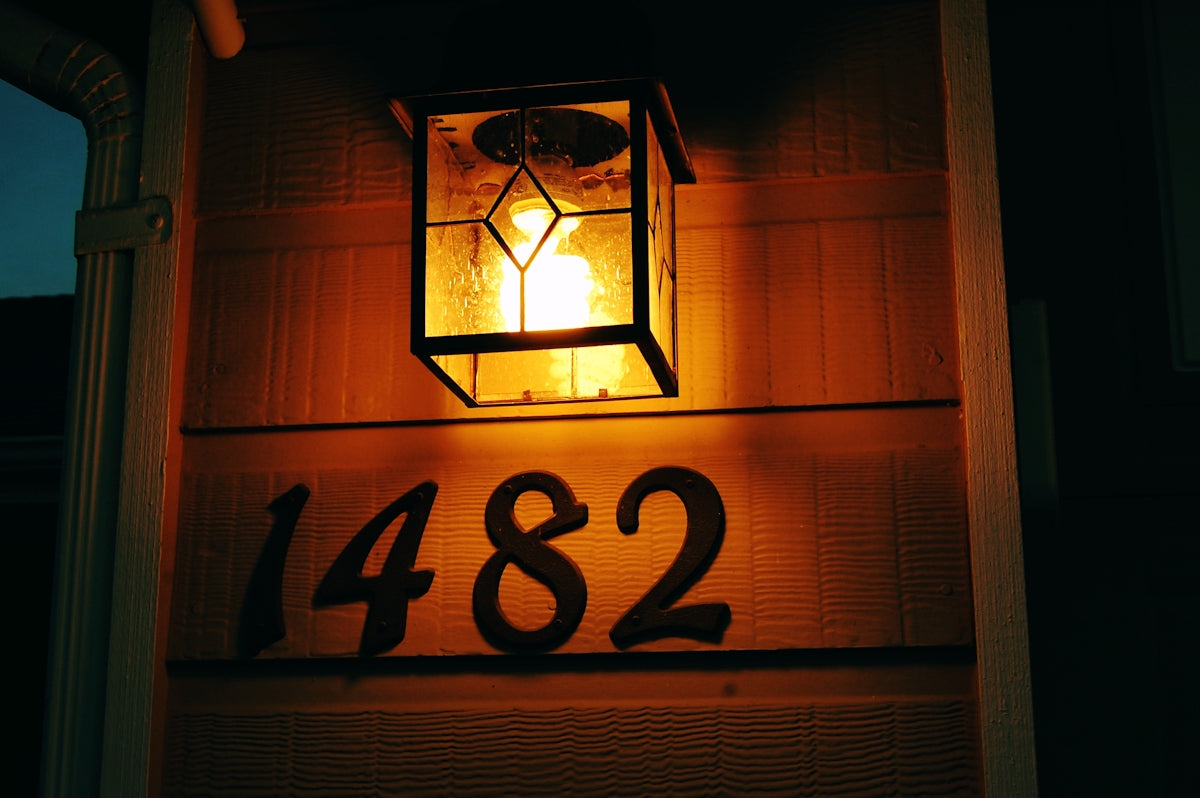
How to illuminate a house number?
Illuminating your house number is a simple upgrade that pays off nightly: faster deliveries, easier navigation, and a more polished entry. Here’s a clear path to the best lighting for your address.
Lighting approaches (with pros and cons)
-
Backlit numbers (best overall): Even illumination, minimal glare, clean look, reliable with low‑voltage power.
-
Top‑mounted mini downlight: Simple retrofit, but can create hot spots/shadows.
-
Sconce grazing: Stylish, yet often lights the wall more than the numbers.
-
Solar plaques: Easy, but performance varies with shade, season, and panel quality.
Pick the right color temperature
-
2700–3000K: Warm, welcoming, great for traditional facades.
-
3500–4000K: Neutral, crisp readability—ideal for longer setbacks.
Power options
-
Low‑voltage (12V DC): Safe, efficient, widely compatible with dusk‑to‑dawn.
-
Plug‑in with outdoor GFCI and timer/smart plug: Fast setup where an outlet is nearby.
-
Solar: Use only when your location gets strong daily sun.
Positioning and angles
-
Place numbers near the primary entry, 5–6 ft high, with a clean sightline from the street.
-
If using spots, set a shallow angle and diffuse the beam to avoid hot spots.
Cable management tips
-
Route wire behind trim or within a shallow channel; seal penetrations with exterior‑grade sealant.
-
Use UV‑resistant clips and paintable raceway where needed.
Subtle product prompt
-
“See backlit house number kits with built‑in diffusion”
-
“Compare low‑voltage transformers and dusk‑to‑dawn options”
FAQ
-
Can I connect to a doorbell transformer? Usually no (voltage/current mismatch); use a dedicated 12V driver.
-
Will it work with smart home routines? Yes—use a smart plug or low‑voltage controller.
Upgrade to purpose‑built, backlit address numbers for even, reliable illumination every night.